• Trenchless Pipe Bursting vs. Traditional Sewer Excavation: Which is Best for Your Yard?

    By D. Jason Plumbing |

    Plumber Mississauga

    For modern homeowners, few property management emergencies trigger as much immediate anxiety as a backed-up main sewer line. Beyond the unpleasant aesthetic and sanitary consequences inside the home, the realization that the subterranean infrastructure connecting your dwelling to the municipal sewer line has compromised structural integrity can be daunting. Historically, fixing a collapsed, severely cracked, or root-choked lateral sewer pipe meant turning your front yard into a construction zone by destroying manicured lawns, tearing through custom flagstone walkways, splitting asphalt driveways, and disrupting household life for days or even weeks.

    However, advances in trenchless technology over the past two decades have fundamentally shifted how utility contractors approach underground pipe replacement. Chief among these innovations is trenchless pipe bursting, a modern method designed to replace failing underground pipes without digging continuous trenches across private property. Yet, despite its rapid adoption, pipe bursting is not a universal magic bullet. Certain geotechnical conditions, structural collapses, and municipal regulations still make open-trench excavation the necessary choice.

    The Reality of Main Sewer Line Failures in Mature GTA Neighbourhoods

    To understand why modern replacement methods are in such high demand, one must first look beneath the surface of the region’s historical housing stock. The Greater Toronto Area is defined by decades of urban expansion, featuring established neighbourhoods built throughout the late 19th and mid-20th centuries, such as High Park, Cabbagetown, The Annex, Old East York, and inner-ring suburbs in Mississauga, Scarborough, and Etobicoke. While these communities boast mature tree canopies and architectural character, their below-ground infrastructure is reaching the end of its design life span.

    Prior to the mid-1970s, residential sewer laterals were constructed primarily using two materials: vitrified clay pipe (VCP) and cast iron pipe. In older homes dating from the post-WWII housing boom up to the 1970s, contractors frequently used bitumenized fiber pipe, commonly known as “Orangeburg”. Each of these legacy materials suffers from predictable structural degradation patterns over time:

    • Vitrified Clay Pipe (VCP): Clay pipe is inherently brittle. Over 50 to 100 years, soil settlement, seismic vibrations from nearby road traffic, and seasonal freeze-thaw cycles cause clay pipes to shift, crack, and separate at their mechanical joints. These open joints emit moisture and nutrient scents that act as magnets for aggressive tree roots. Once roots enter the pipe, they expand, catching debris and causing recurring blockages before ultimately breaking the pipe apart.
    • Cast Iron Pipe: While cast iron exhibits excellent initial tensile strength, it suffers from tuberculation and interior scale buildup over decades of wastewater exposure. Moisture and hydrogen sulfide gas lead to channel rot along the bottom (invert) of the pipe, thinning the metal until the base corrodes away entirely, allowing soil to slump into the sewage flow.
    • Orangeburg Pipe: Made from compressed wood fiber impregnated with coal tar, Orangeburg pipe was a low-cost material that was never designed for multi-generational performance. Under decades of ground pressure, these pipes blister, flatten into oval shapes, layer-delaminate, and suffer complete structural sewer failure.

    When an underground conduit experiences structural breakdown, standard drain snaking or high-pressure hydro-jetting offers only temporary relief. These clearing techniques remove organic clogs or cut back root masses, but they do not repair broken walls or realign offset joints. Once a line has suffered true structural decay, full physical replacement of the lateral sewer line repair target becomes unavoidable. The question then becomes how best to execute that replacement with minimal secondary loss to property value.

    Understanding Traditional Sewer Excavation

    Traditional sewer excavation, often referred to as the “open trench” method, has been the standard construction practice for over a century. The core operational logic is straightforward: to replace an underground pipe, technicians must dig open the earth directly above it along its entire trajectory, from the exterior foundation wall of the home to the municipal main connection at the property line or curb.

    The process begins with utility mark-outs (locating underground gas, hydro, and telecommunication lines) followed by the deployment of heavy excavation machinery. A track excavator or backhoe is positioned in the yard to break through surface paving and dig a trench typically 4 to 10 feet deep and 3 to 5 feet wide, depending on the depth of the local municipal sewer infrastructure.

    During an open trench excavation extending 80 linear feet at a depth of 6 feet, over 70 tons of earth must be removed, stockpiled, and later backfilled. In narrow urban lots, this frequently requires hauling soil off-site temporarily due to spatial constraints, increasing overall operational costs.

    Once the legacy pipe is completely uncovered, workers enter the trench (utilizing trench shoring boxes if required by occupational safety standards) to manually break apart the old conduit, discard the degraded materials, and clear the trench bed. A new bed of aggregate gravel is carefully graded to ensure the proper pitch, typically a minimum of a 1/4-inch drop per linear foot, to guarantee gravity-driven sewage flow. The replacement pipe, usually rigid Polyvinyl Chloride (PVC) schedule 40 or 80, is then assembled piece-by-piece, solvent-welded or mechanically coupled, inspected by municipal staff, and finally backfilled with soil before mechanical compaction.

    While open trenching allows contractors to visually inspect the entire length of the exposed line and correct adverse slope issues, its physical impact on the surrounding property is severe. Driveways are jackhammered, mature decorative trees and established gardens are uprooted, retaining walls are disrupted, and porch steps may need structural underpinning if the trench runs immediately adjacent to foundations.

    Understanding Trenchless Pipe Bursting

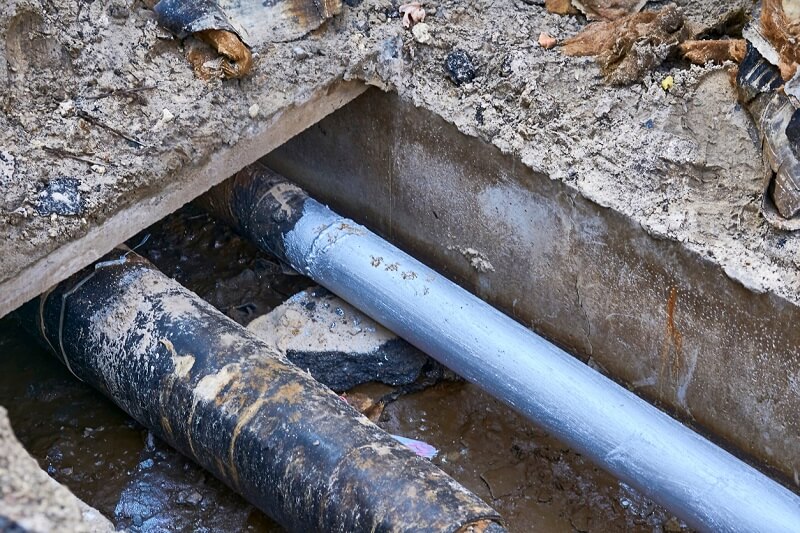
    Trenchless pipe bursting was developed specifically to eliminate the destructive footprint associated with open-trench excavation. Rather than digging up the entire length of the subterranean pipe, pipe bursting utilizes the path of the existing, degraded sewer line to install a brand-new, seamless pipe directly through the space occupied by the old one.

    Instead of continuous trenching across the yard, pipe bursting requires only two small excavation access points:

    1. The Insertion Pit: A small pit (typically 4×4 feet) dug near the point where the sewer lateral exits the home foundation or at a cleanout location.
    2. The Pulling Pit: A second small excavation point situated at the downstream connection end, usually near the property line or city main tie-in point.

    Because the new pipe is installed beneath the surface without disturbing the topsoil along the run, trenchless pipe bursting serves as the benchmark technology for landscape preservation. Modern hardscaping, custom stone paver driveways, historical brick retaining structures, and mature root zones remain intact while heavy infrastructure replacement occurs quietly several feet below.

    The Engineering Process: How the Bursting Head Shatters Old Clay and Iron Pipes

    The technical core of trenchless pipe bursting relies on progressive radial mechanical displacement. The operation follows a precise sequence of engineering steps:

    First, technicians feed a high-tensile flexible steel aircraft cable through the degraded host pipe, starting from the pulling pit and extending upstream to the insertion pit. At the insertion pit, this cable is attached to the nose of a specially engineered conical expansion tool known as a hydraulic bursting head (or pneumatic mole, depending on the system dynamics). The back end of this bursting head is permanently attached to a continuous segment of brand-new pipe made of continuous high-density polyethylene (HDPE).

    At the pulling pit, a powerful hydraulic pulling frame is anchored securely against the earth. When activated, the hydraulic assembly exerts tens of thousands of pounds of continuous pulling force on the steel cable. As the expanding hydraulic bursting head is drawn through the old host pipe, its unique geometry, featuring an outer diameter 5% to 20% larger than the old pipe, applies tremendous outward radial pressure.

    This immense mechanical force fractures the old, brittle pipe (whether vitrified clay, cast iron, concrete, or brittle plastic) outward into the surrounding soil column. Fin-like cutting blades on the leading edge of the bursting head split ductile sections, pressing the broken shards outward into the soil void. Simultaneously, as the head clears the path through the earth, it seamlessly pulls the attached trailing line of smooth, flexible, continuous high-density polyethylene (HDPE) directly into the newly created subterranean tunnel behind it.

    Because HDPE pipe sections are thermally butt-fused together on site prior to insertion, the resulting pipeline is completely seamless from end to end. It eliminates mechanical joints entirely, which removes the primary point of vulnerability where tree roots traditionally enter and water exfiltrates.

    Side-by-Side Comparison: Cost, Project Timeline, and Environmental Disruption

    When selecting between open trench excavation and trenchless pipe bursting, homeowners must evaluate direct construction costs alongside indirect restoration expenses. A line-item analysis often reveals that while pipe bursting equipment commands a higher specialized trade rate, the total project cost balance frequently favours trenchless methods once landscape restoration is accounted for.

    Regarding surface excavation area, traditional open trenching requires digging a continuous trench along the full pipe length, often 50 to 100 feet long and 3 to 5 feet wide. In contrast, trenchless pipe bursting leaves a minimal surface footprint restricted strictly to an insertion pit and a pulling pit.

    In terms of project duration, traditional excavation typically demands 3 to 5 business days for initial digging, pipe laying, backfilling, and rough grading. Trenchless pipe bursting is routinely completed in a single day, often requiring only 8 to 10 hours of total operational time on site.

    When comparing pipe materials and long-term durability, traditional methods utilize rigid PVC Schedule 40 or 80 assembled with solvent glue or mechanical couplings, yielding an expected lifespan of over 50 years. Pipe bursting utilizes thermally fused continuous high-density polyethylene (HDPE), which creates a jointless structure with an expected service lifespan exceeding 100 years.

    Secondary restoration costs reflect these surface outcomes. Traditional open trenching often incurs substantial post-plumbing expenses ranging from $3,000 to over $15,000 for repaving driveways, pouring new concrete, relaying sod, and replacing custom masonry. Trenchless pipe bursting minimizes secondary restoration costs, typically requiring only $500 to $1,500 to patch and re-sod the two small access locations. Even if an access pit must cut into an asphalt driveway or concrete path, localized patching costs remain low, usually between $1,000 and $2,500.

    Secondary restoration costs reflect these surface outcomes. Traditional open trenching often incurs substantial post-plumbing expenses ranging from $3,000 to over $15,000 for repaving driveways, pouring new concrete, relaying sod, and replacing custom masonry. Trenchless pipe bursting minimizes secondary restoration costs, typically requiring only $500 to $1,500 to patch and re-sod the two small access locations.

    Finally, root resistance differs based on joinery. Glued PVC joints used in traditional trenching resist root intrusion well, but ground shifting over time can pop these mechanical joints. The monolithic, fused HDPE construction installed via pipe bursting contains zero mechanical joints, offering complete structural protection against tree root intrusion.

    From a timeline perspective, traditional excavation requires multiple heavy machinery mobilizations, extensive digging, pipe alignment check stages, and multi-stage backfilling to minimize future ground settling. This leaves the homeowner without functional drainage facilities for several days. In contrast, a trenchless lateral sewer line repair crew can perform access pit excavation, heat-fuse the HDPE pipe, execute the bursting pull, make final plumbing tie-ins, and backfill the access pits in a single working day, restoring internal water service before nightfall.

    Property Constraints: When Trenchless Isn’t Geotechnically Viable

    While trenchless pipe bursting offers clear advantages for landscape preservation and swift execution, experienced municipal utility engineers recognize that it is not applicable in every scenario. Geotechnical site constraints and existing pipe conditions can sometimes make trenchless installation impossible or cost-prohibitive.

    The primary scenarios where open-trench traditional excavation remains the necessary or superior option include:

    1. Complete Structural Collapse or Severe Sagging (Belly in the Line): If a legacy pipe has suffered complete underground collapse where the crown has caved in and filled the void with dense rock, compacted earth, or large debris, a pulling cable or CCTV camera cannot pass through to guide the head. Furthermore, pipe bursting follows the exact path of the old host pipe. If the original sewer line was installed improperly with an incorrect slope, or has developed a severe low point (“belly”) due to soil settling, pipe bursting will simply mirror that structural flaw. To eliminate a belly and restore proper gravity fall, contractors must open-trench the line to physically regrade the underlying soil bed.
    2. Extreme Utility Crowding and Proximity: In high-density urban areas across the GTA, subterranean space is densely packed. The expanding action of a hydraulic bursting head exerts outward radial forces that displace surrounding soil up to several inches beyond the original pipe diameter. If a gas main, underground electrical conduit, or main water service runs directly parallel to or within inches of the old sewer pipe, the outward shockwave and soil expansion can fracture adjacent utilities. In these tight clearance zones, controlled hand-digging or traditional trenching is required to prevent secondary damage.
    3. Ductile Iron and Heavy Schedule Metallic Encapsulation: While standard thin-walled cast iron breaks easily under the impact of a bursting head equipped with cutting fins, heavy-duty thick-walled ductile iron pipe, structural steel sleeves, or pipes encased in solid concrete envelopes cannot be burst reliably using standard residential pull rigs. Attempting to burst concrete-encased line segments can lock up hydraulic pullers or damage surrounding structural foundations.
    4. Severe Offsets and Directional Bends: Pipe bursting heads and trailing flexible HDPE lines can navigate mild sweep bends (such as standard 22.5-degree or gradual long-sweep 45-degree fittings). However, if the existing host line contains sharp 90-degree elbows, short-radius turns, or severe vertical drops, the rigid bursting head cannot negotiate the turn without binding or destroying the fitting hub. In such properties, technicians must either dig up the sharp bends to install transitional access pits or perform a full open-trench excavation along the curved route.

    Contact D. Jason Plumbing Today

    When dealing with a structural sewer failure beneath your lawn, choosing the right repair strategy comes down to balancing structural engineering needs with property preservation priorities. For the vast majority of homeowners in mature residential neighbourhoods, trenchless pipe bursting represents the modern standard for lateral sewer line repair, delivering a seamless, root-proof continuous high-density polyethylene (HDPE) pipe with minimal disruption to your home’s exterior aesthetic.

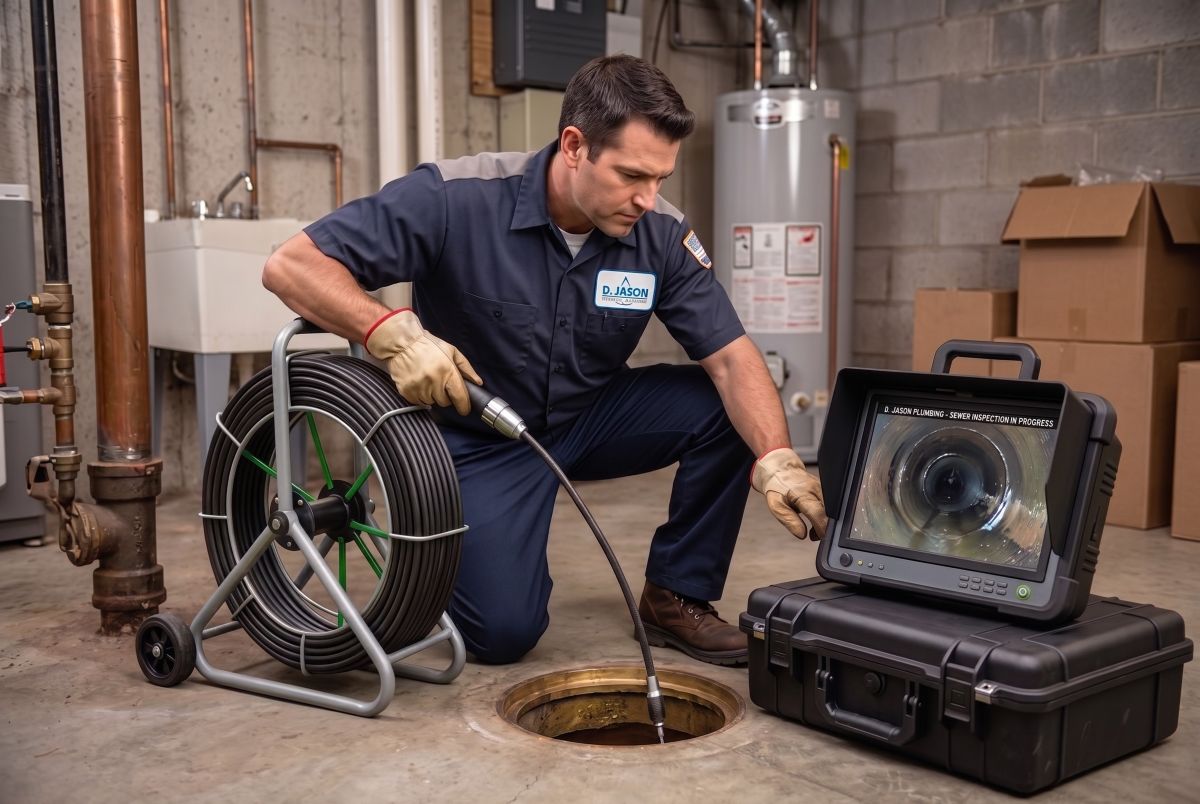
    To determine the correct path forward for your home, insist on a professional subterranean CCTV camera inspection from a licensed plumbing contractor. A high-definition camera traverse will pinpoint the exact depth, material, slope, and structural state of your current line, confirming whether your property is an ideal candidate for the non-invasive power of trenchless pipe bursting or if traditional excavation is necessary to safeguard your home’s foundational drainage. Contact D. Jason Plumbing to discuss the best solution for your yard.

    Reference: https://plumbingquotes.ca/blog/sewer-line-replacement-cost

  • Emergency: “I Can Smell Sewage” (Diagnosis Guide)

    By D. Jason Plumbing |

    Plumber Mississauga

    Walking into your home only to be met with the unmistakable, pungent odour of raw sewage is more than just an unpleasant surprise; it is a plumbing emergency that demands immediate attention. At D. Jason Plumbing, we know that plumbing odours diagnosis can be stressful for homeowners. You might be wondering if the fix is as simple as running a faucet or as complex as excavating a main line.

    This guide will walk you through the most common culprits of a sewer gas smell in house, how to identify them, and when it’s time to call in the professionals.

    Is Sewer Gas Dangerous? (Health & Safety First)

    Before we dive into the mechanics of your pipes, we must address the “elephant in the room”: safety. Sewer gas isn’t just a nuisance; it is a complex mixture of toxic and non-toxic gases, including hydrogen sulfide, ammonia, and methane.

    • Toxicity: High concentrations of hydrogen sulfide are toxic to the human body and can cause headaches, dizziness, or nausea.
    • Flammability: Methane is highly combustible. While it usually takes a significant buildup to create an explosion risk, it is a factor that should never be ignored.
    • Asphyxiation: In extreme cases, sewer gas can displace oxygen in confined spaces.

    Culprit 1: The Dried-Out P-Trap (The #1 Cause)

    The most frequent reason for a sudden sewage stench is also the simplest to fix. Every drain in your home, sinks, showers, and floor drains, is equipped with a “P-trap.” This U-shaped pipe is designed to hold a small amount of water at all times. This water acts as a physical seal, blocking sewer gases from rising up through the pipes and into your living space.

    If a guest bathroom or a basement floor drain goes unused for weeks or months, the water in that trap evaporates. This results in a dry p-trap, leaving the “door” wide open for odours to enter your home.

    The Easy Fix: Just Add Water

    If you suspect a floor drain dried out in your mechanical room or a spare tub is the source, the solution is easy:

    1. Run the tap or pour a gallon of water down the drain.
    2. Wait about 15–20 minutes for the air to clear.
    3. Pro Tip: If it’s a drain you rarely use, pour a teaspoon of mineral oil down after the water. The oil sits on top of the water and slows down the evaporation process.

    Culprit 2: The Broken Toilet Wax Ring

    If the smell seems localized to a specific bathroom and persists even after you’ve used the fixtures, the issue might be under your feet. Your toilet is sealed to the closet flange (the drain pipe) by a wax ring. This ring creates an airtight and watertight seal.

    Over time, if a toilet becomes loose and “rocks” back and forth, the wax ring can compress or crack. A wax ring toilet leak doesn’t always result in a puddle of water on the floor; sometimes, it only allows gas to escape. If you notice a “wobble” when you sit down or see dark staining in the grout around the base of the toilet, the wax seal has likely failed.

    Culprit 3: Clogged Vent Stacks (The “Gurgle” Sound)

    Your plumbing system needs to breathe. Every home has a vent stack—a pipe that leads from your sewer system up through the roof. This stack allows sewer gases to escape into the atmosphere and provides atmospheric pressure so that water flows smoothly down your drains.

    If a bird builds a nest in the stack, or if ice and debris clog it, the gas is forced back down and out of your interior drains. A key sign of a cracked vent stack or a clog is a “gurgling” sound coming from your sinks when you flush the toilet. This happens because the system is desperately trying to pull air from wherever it can get it.

    Culprit 4: Cracked Sewer Lines (The Serious Issue)

    The most significant cause of a sewer gas smell in the house is a structural failure in the waste lines themselves. This could be a crack in a cast-iron stack behind a wall or a break in the main lateral line under your yard or basement slab.

    These cracks are often caused by:

    • Tree root intrusion.
    • Shifting soil or foundation settling.
    • Corrosion in older galvanized or cast-iron pipes.

    If the smell is strongest in the basement or outside near your foundation, or if you notice unexplained lush, green patches in your lawn, you may be dealing with a broken underground line.

    Call D. Jason Plumbing Today

    Sometimes, the source of the smell is a “ghost.” You can’t see a leak, the traps are full, and the toilets are tight, yet the smell remains. This is when it’s time to call in the experts at D. Jason Plumbing.

    Locating hidden sewer gas leaks can be incredibly complex. Our licensed plumbers have the training and professional diagnostic tools required to trace the problem back to its source—whether it’s a hairline crack in a hidden pipe or a failing vent behind a wall. We take the guesswork out of the equation, finding the exact issue so we don’t have to tear into your home blindly to make the right repair.

    Contact us today to ensure the smells you are experiencing in your home are resolved safely. We offer plumbing services to clients across Etobicoke, Mississauga, Toronto, and Brampton.


  • Signs You Have a Sewer Line Problem (And How to Confirm It)

    By D. Jason Plumbing |

    Plumber Mississauga

    Your home’s plumbing system is a complex network, and while we often focus on the pipes and fixtures inside our house, there’s one unsung hero that’s critical to the entire operation: your main sewer line. This is the large pipe that carries all of your household’s wastewater—from your sinks, showers, toilets, and laundry machines—out to the municipal sewer system or your septic tank. When this vital component is compromised, it can quickly turn into a messy and expensive nightmare.

    Ignoring the subtle signs of a failing sewer line can lead to catastrophic damage to your home and property. The key is to recognize the early warning signs so you can act before a small issue becomes a full-blown emergency. In this blog, we’ll walk you through the most common indicators of a sewer line problem and explain the most effective way to get a definitive diagnosis.

    Why Your Main Sewer Line is a Critical Part of Your Home’s Plumbing

    Think of your main sewer line as the highway for your home’s wastewater. Every toilet flush, every shower drain, and every dish you wash ultimately sends its contents down this single pipe. It’s designed to handle a significant volume of waste and debris. However, over time, a number of factors can lead to problems, including:

    Age and corrosion: Older pipes, especially those made of cast iron or clay, can corrode, crack, or collapse.

    Tree roots: Tree roots in sewer lines are a common culprit. Tree and shrub roots naturally seek out sources of water and nutrients, and the tiny cracks in your sewer line can be a perfect entry point. Once inside, they can grow and form a dense mass, leading to a complete sewer line clog.

    Shifting soil: Ground movement due to soil erosion, freezing and thawing cycles, or nearby construction can cause pipes to shift, disconnect, or break.

    Improper disposal: Flushing non-biodegradable items like wet wipes, feminine hygiene products, or large amounts of grease can create stubborn blockages.

    Understanding these potential causes is the first step in recognizing the signs of a problem.

    Sign 1: Multiple Drains are Backed Up

    This is often the most obvious and immediate sign of a major problem. If you notice that your kitchen sink, bathroom sink, and shower are all experiencing slow drains or are completely backed up at the same time, it’s a strong indication that the problem isn’t a localized clog in one fixture. Instead, it suggests a blockage in a shared drainage pipe, likely your main sewer line. When the main line is clogged, the wastewater has nowhere to go and will back up into the lowest drains in your home.

    Sign 2: Strange Gurgling Noises from Toilets and Drains

    Have you ever flushed the toilet and heard a strange gurgling toilet sound coming from the shower drain? Or heard a bubbling noise from your bathroom sink while doing laundry? These noises are a significant red flag. They occur when air is trapped in the drain lines, trying to escape past a blockage. The air bubbles are forced up through the water in your P-traps (the curved pipes under your sinks) creating the gurgling sound. This is a classic indicator of a partial or complete sewer line clog.

    Sign 3: The Unmistakable Smell of Sewer Gas

    Your plumbing system is designed to be airtight, with P-traps and vents preventing sewer gases from entering your home. If you start to notice a persistent and foul sewer gas smell coming from one or more of your drains, it could mean that a sewer line blockage is causing a pressure build-up that is forcing gases back into your house. It can also indicate a crack or leak in the sewer line itself, allowing gas to escape. This is not just a nuisance; sewer gas contains methane and hydrogen sulfide, which can be hazardous to your health in high concentrations.

    Sign 4: Water Backing Up in Unexpected Places

    This is a more dramatic and alarming sign of a significant blockage. For example, if you flush your toilet and a few minutes later, water backs up into your shower or bathtub, it’s a clear sign that the main sewer line is blocked. The wastewater from the toilet has nowhere to go, so it takes the path of least resistance and surfaces in the next available drain.

    Sign 5: A Soggy or Unusually Green Patch in Your Yard

    Your sewer line runs underground from your house to the street. If the pipe has a leak or is completely broken, the wastewater will escape into the surrounding soil. This can lead to a few visible signs in your yard:

    A soggy area: A patch of your lawn may feel spongy or constantly wet, even during dry weather.

    An extra-green patch: The nutrients in wastewater can act as a natural fertilizer, causing a specific area of grass or plants to grow much faster and appear greener than the rest of your lawn.

    A sunken spot: A severe leak can erode the soil beneath your lawn, causing a depression or sunken spot to appear.

    These signs are particularly telling and often point directly to the location of the sewer line problem.

    Sign 6: Foundation Issues like Cracks or Settling

    While less common, a leaking sewer line can cause significant damage to your home’s foundation. As water leaks from the pipe, it can saturate the soil underneath your home, leading to soil expansion and contraction that can put immense pressure on your foundation. This can result in cracks in the foundation, walls, or even uneven floors. If you notice new foundation cracks in combination with other signs on this list, a sewer line issue could be the cause.

    Sign 7: Pest Problems (Rodents and Insects)

    Sewer lines are a common travel route for rodents like rats and mice. If your sewer line is cracked or broken, it can serve as a superhighway directly to your home. You may notice an increase in rodents in your home, particularly in the basement or around plumbing fixtures. Additionally, broken sewer lines can be a breeding ground for insects like cockroaches and drain flies, which can then find their way into your house.

    plumber inspecting sewer line

    The Definitive Answer: How a Sewer Camera Inspection Works

    While the above signs provide strong clues, the only way to get a definitive diagnosis is with a sewer camera inspection. This is a non-invasive, highly effective method that takes the guesswork out of the equation.

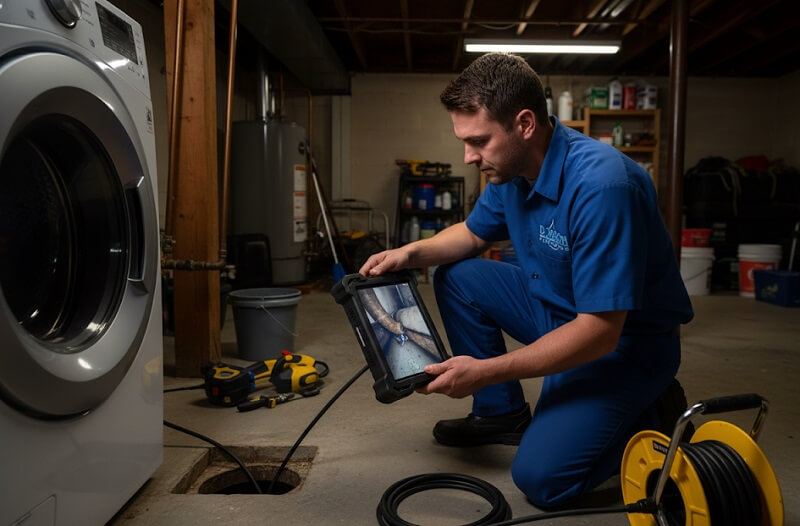
    A professional plumber inserts a high-resolution, waterproof camera attached to a flexible cable into your sewer line, typically through a cleanout access point. The camera sends a live video feed back to a monitor, allowing the technician to see the inside of your pipe in real-time. This technology allows them to:

    Pinpoint the exact location of the clog: Whether it’s a tree root, a grease buildup, or a collapsed section of pipe.

    Determine the cause of the problem: They can see if the pipe is cracked, disconnected, or if there’s a foreign object causing the blockage.

    Assess the overall condition of the pipe: They can check for age-related wear, corrosion, and potential future problems.

    Provide a precise diagnosis: The video footage allows the plumber to show you exactly what’s wrong and make an accurate recommendation for repair.

    This service is invaluable, as it prevents unnecessary excavation and allows for the most targeted and cost-effective repair solution.

    plumber using snake

    What Are Your Options if You Have a Sewer Line Problem?

    Once the problem is confirmed with a sewer camera inspection, your plumber will recommend a solution based on the specific issue. Common repair methods include:

    Hydro-jetting: For blockages caused by grease or minor debris, a powerful stream of water can clear the clog.

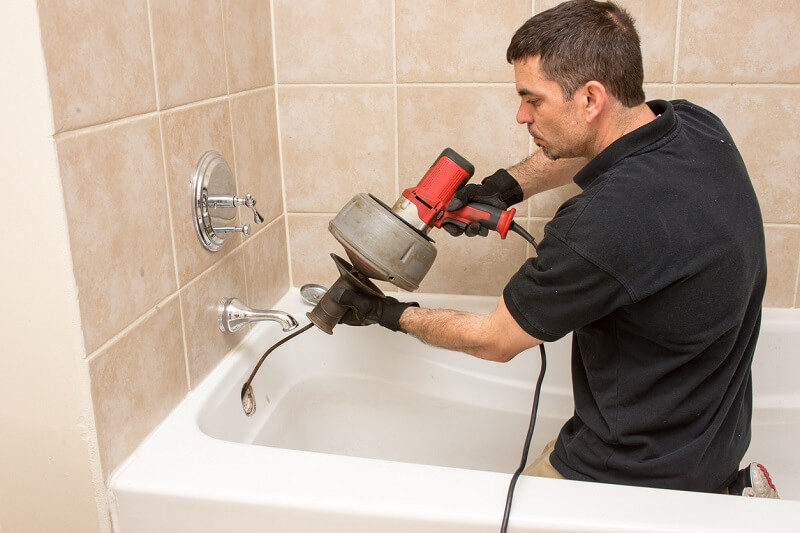
    Pipe snaking: A flexible auger is used to break through and remove clogs like hair or minor tree roots.

    Trenchless Sewer Repair: For more severe issues like a collapsed pipe or root intrusion, a trenchless sewer repair is often the best solution. This modern method, which includes pipe bursting and pipe lining, is minimally invasive. It avoids the need for extensive digging, preserving your lawn and landscaping, and is often faster and more affordable than traditional excavation.

    Contact D.Jason Plumbing

    Don’t wait until a small leak becomes a major flood. If you’re experiencing any of the signs on this list, contact a qualified plumbing professional immediately to schedule a sewer camera inspection. Acting quickly will protect your Etobicoke home, your property, and your wallet from a costly disaster. For any questions or to schedule a consultation, contact D. Jason Plumbing today.


  • What to Do (and Who to Call) When Your Basement Floods in Etobicoke

    By D. Jason Plumbing |

    Plumber Mississauga

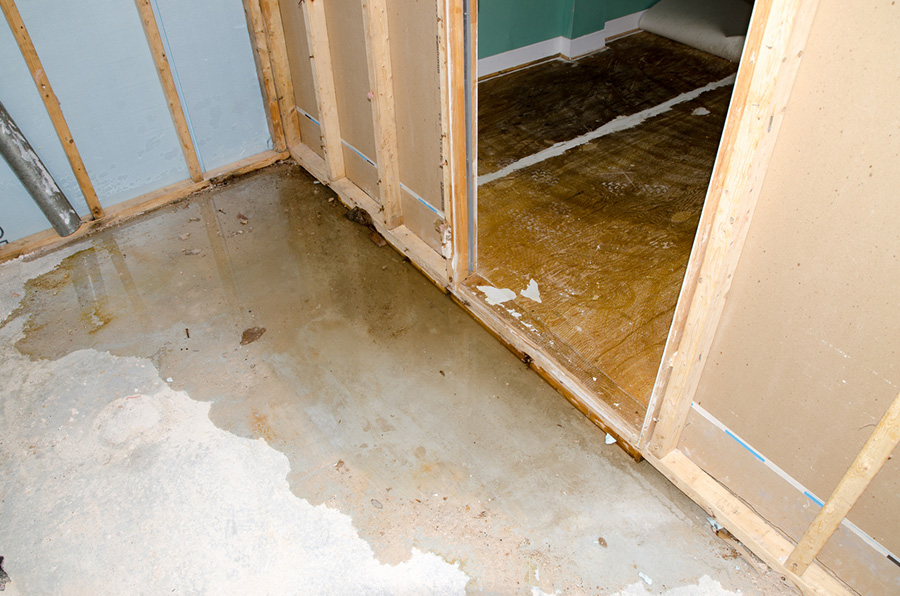
    Few homeowner nightmares are as stressful and destructive as discovering basement flooding in Etobicoke. Whether it’s a slow leak, a burst pipe, or a deluge from heavy rainfall overwhelming your drainage system, water in your basement can cause extensive property damage, foster mold growth, and compromise the structural integrity of your home. When water starts to rise, every minute counts. Knowing the immediate steps to take, who to call, and how to prevent future incidents can significantly reduce the damage and the stress.

    Immediate Steps When You Discover Basement Flooding

    The moment you find water in your basement, swift action is crucial.

    1. Prioritize Safety:
      • Shut off the power: If it’s safe to do so, turn off the electricity to the affected area from your main breaker panel. Do NOT wade into standing water if the power is still on, as there’s a risk of electrocution.
      • Identify the Water Source: If it’s a burst pipe or overflowing appliance, try to shut off the main water supply to your home.
    2. Stop the Water (If Possible): If the source is clear (e.g., a burst pipe), turn off the water. For external sources like heavy rain, consider temporary measures like sandbags if possible, but often professional intervention is needed quickly.
    3. Document the Damage: Before you move anything or start cleanup, take clear photos and videos of everything. This visual evidence will be vital for your insurance claim.
    4. Remove Valuables and Salvageable Items: If safe, move furniture, electronics, and personal belongings out of the water and to a dry area. The faster you remove items, the higher the chance of saving them from irreparable water damage and mould.


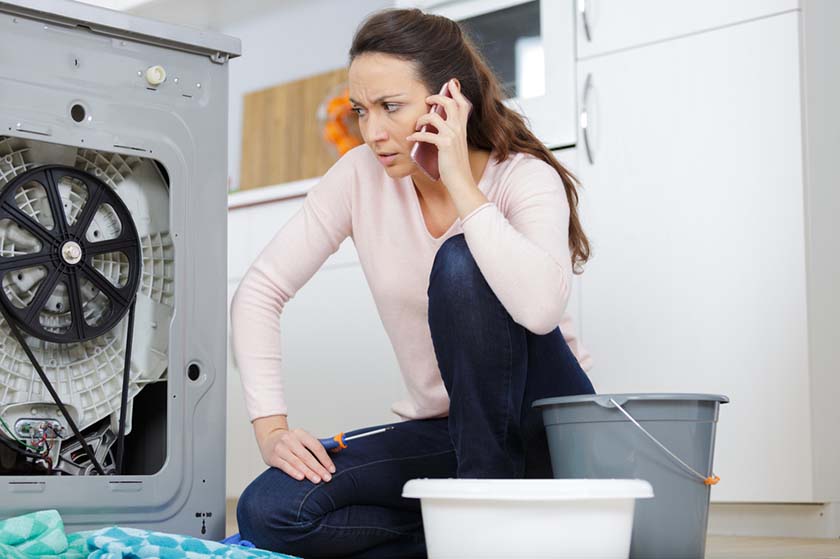
    frustrated woman on the phone next to washing machine

    Who to Call: Your Emergency Plumbing Experts

    Once initial safety measures are taken and you’ve documented the scene, the next critical step is to call professionals. For basement flooding in Etobicoke, a licensed and experienced plumbing service is your first line of defence. They can help identify the source, stop the flow, and begin the mitigation process. You can learn more about our comprehensive services here.

    How much does it cost to fix a flooded basement in Etobicoke?

    The cost to fix a flooded basement in Etobicoke can vary dramatically, ranging from a few thousand dollars to tens of thousands, depending on several key factors:

    • Extent and Type of Damage: A small leak impacting a single area (e.g., $1,500 – $3,500) is far less costly than a fully flooded basement requiring extensive cleanup and restoration, which can range from $5,000 to $25,000 or more.
    • Water Category:
      • Category 1 (Clean Water): From a burst supply pipe or overflowing sink. Less costly to clean.
      • Category 2 (Grey Water): From washing machines, dishwashers, or groundwater seepage. Contains contaminants.
      • Category 3 (Black Water): Sewage backup or outdoor floodwaters. Highly contaminated and requires extensive sanitation, making it the most expensive to remediate.
    • Duration of Standing Water: The longer water sits, the more damage it causes to porous materials (drywall, carpet, wood), increasing replacement costs and the risk of mould.
    • Mould Remediation: If mould develops, professional mould removal can add significantly to the cost, potentially tens of thousands of dollars, depending on the severity.
    • Structural Damage: If the foundation or structural elements are compromised, repairs will be substantial.
    • Preventative Measures: Installation of new sump pumps or backwater valves (often $1,000-$3,500) might be necessary to prevent future flooding, adding to the overall expense.

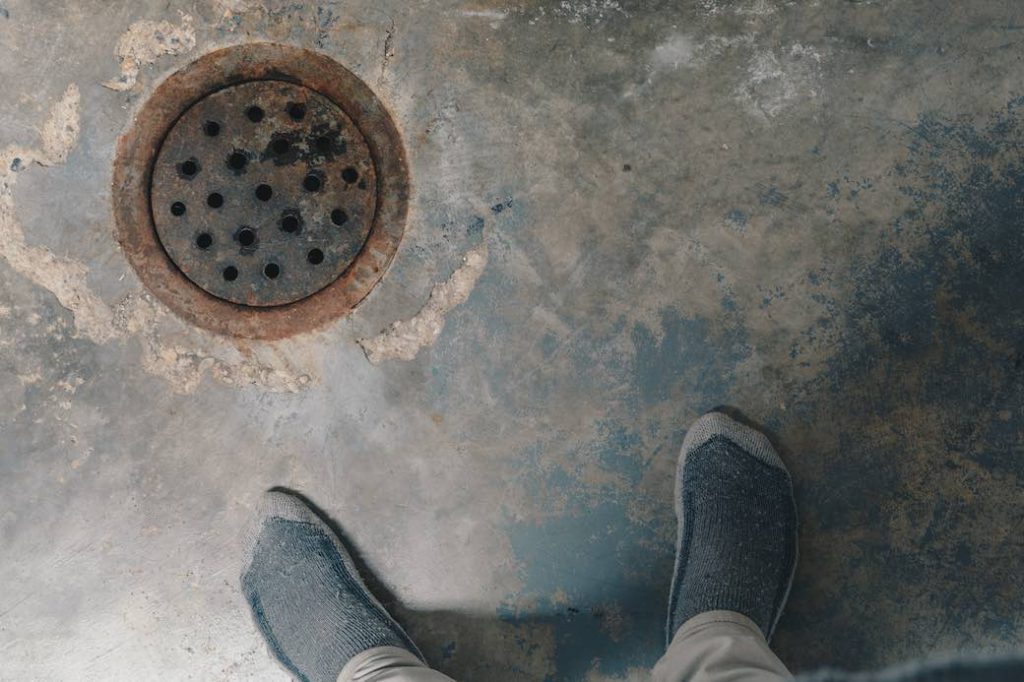
    basement sewer drain

    Can I claim basement flooding on my home insurance in Ontario?

    Navigating insurance claims for basement flooding in Etobicoke can be complex, as standard home insurance policies in Ontario often have specific exclusions.

    • What’s Typically Covered: Most standard policies cover “sudden and accidental” water damage from sources within your home, such as a burst pipe, overflowing appliance (washing machine, dishwasher, hot water heater), or a malfunctioning toilet.
      • Be aware of your requirements, for example your insurance company may not provide coverage for leaking hot water heaters that are over 15 years, or for burst washing machine hoses that are made from rubber and are over 5 years old.
    • What’s Often Excluded (Requires Endorsement):
      • Overland Flood: Water entering your home from overflowing rivers, lakes, heavy rainfall, or surface water pooling. This requires a separate overland flood insurance endorsement.
      • Sewer Backup: Water backing up from municipal sewer lines, septic tanks, or drains. This is a very common cause of basement flooding in Etobicoke and typically requires a specific sewer backup endorsement on your policy. This is highly recommended coverage given the risks.
      • Groundwater Seepage: Slow, gradual seepage of water through foundation cracks. This is generally considered a maintenance issue and is usually not covered.
    • Neglect and Maintenance: If the flooding is a direct result of your failure to maintain your property (e.g., clogged gutters, unaddressed foundation cracks, or a known faulty sump pump without proper coverage), your claim might be denied or reduced.
    • Action Post-Flood: It’s crucial to report the flood to your insurer immediately and take reasonable steps to mitigate further damage (e.g., water removal, drying out) to ensure your claim isn’t reduced.

    Always review your specific policy with your insurance provider to understand your coverage limits and exclusions for water damage and flood events.

    What are the signs my sump pump is about to fail?

    Your sump pump is a critical defence against basement flooding in Etobicoke, especially during heavy rains or snowmelt. Being aware of its potential failure signs can help you prevent a disaster:

    • Strange Noises: Grinding, rattling, loud humming, or banging sounds often indicate issues with the impeller, motor, or other internal components.
    • Constant Running (Short Cycling): If your sump pump turns on and off frequently, or runs continuously even when there’s no water, the float switch might be stuck or faulty, or the pump could be undersized for your pit.
    • Failure to Turn On: If water is collecting in the pit but the pump isn’t activating, check for a tripped circuit breaker, an unplugged unit, or a jammed float switch. If these aren’t the cause, the motor may have failed.
    • Infrequent Usage: Ironically, a sump pump that rarely runs can seize up due to lack of use. Regular testing is vital.
    • Visible Rust or Corrosion: Rust on the pump or in the pit can indicate water exposure where it shouldn’t be, or even bacterial iron in the water.
    • Old Age: Sump pumps generally have a lifespan of about 7-10 years. If yours is older, consider proactive replacement.
    • Visible Water (Despite Running): If your sump pump appears to be running but water isn’t being efficiently removed, there might be a clog in the discharge line, or the pump is overwhelmed.

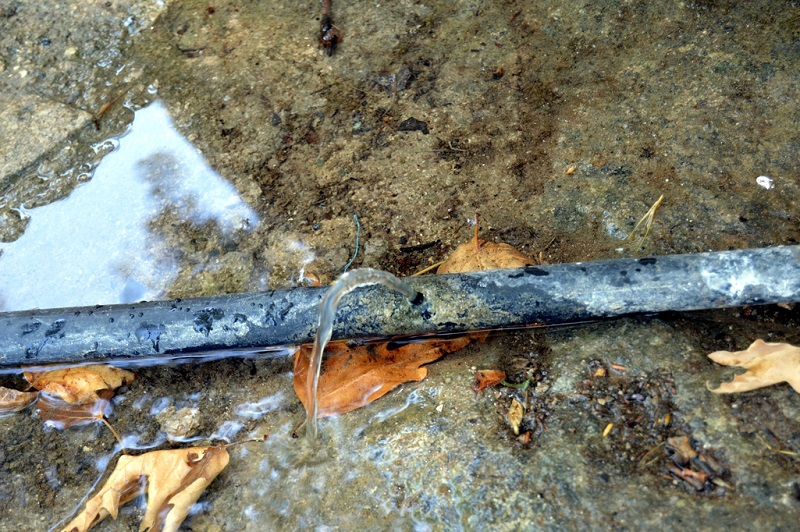
    broken sewer line

    How can I protect my home from sewer backups?

    Sewer backups are a particularly unpleasant and hazardous form of basement flooding in Etobicoke. Fortunately, there are effective preventative measures:

    • Install a Backwater Valve: This is one of the most effective ways to protect your home. A backwater valve is installed on your sewer line and automatically closes if sewage backs up from the main sewer, preventing it from entering your home. Many municipalities, including Toronto, offer subsidy programs for backwater valve installation. Learn more about their importance here.
    • Proper Waste Disposal: Avoid pouring fats, oils, and grease down drains, as they solidify and cause clogs. Never flush items like “flushable” wipes, paper towels, feminine hygiene products, or diapers, as these are major culprits for sewer blockages.
    • Regular Drain Maintenance: Professional drain cleaning can prevent clogs from building up in your pipes. Regular maintenance is key to keeping your drainage system free-flowing.
    • Manage Tree Roots: Tree roots can infiltrate and block sewer lines. Regular professional inspection and root removal can prevent this common issue.
    • Disconnect Downspouts: Ensure your downspouts discharge rainwater away from your foundation and ideally not into the municipal sanitary sewer system.
    • Maintain Proper Lot Grading: Ensure the ground around your home slopes away from the foundation, directing surface water away from your basement walls.

    Contact D. Jason Plumbing Today

    Basement flooding in Etobicoke is a serious issue that demands immediate and informed action. By understanding the causes, knowing the vital steps to take during a flood, and implementing preventative measures, you can significantly mitigate the risk and damage. And when disaster strikes, remember that the swift, professional response of experienced plumbers is invaluable.

    For immediate assistance or to discuss preventative measures for your home, contact us today.


  • Ensuring Property Protection: The Importance of Backwater Valve Installation

    By D. Jason Plumbing |

    Plumber Mississauga

    In the realm of Etobicoke home maintenance and safeguarding property, backwater valve installation stands out as a crucial measure. Often overlooked until faced with the aftermath of sewer backups, this simple device plays a pivotal role in protecting homes from water damage caused by heavy rains or municipal sewer system overload.

    Understanding Backwater Valves

    A backwater valve is a mechanism installed in the sewer line to prevent sewage from flowing back into a structure. It operates on a simple principle: allowing sewage to flow outwards but closing to prevent reverse flow when the pressure from the main sewer line exceeds the pressure inside the building. This mechanism effectively protects basements and lower levels from sewage backup, which can result in costly damage and health hazards, which can ultimately lead to needing urgent assistance. Read more about when to contact an emergency plumber here.

    Installation Process and Considerations

    Installing a backwater valve involves assessing the property’s sewer system layout and choosing an appropriate location. Typically, it’s placed on the main sewer line where it enters the building, ensuring all plumbing fixtures are protected. Professional installation is recommended to ensure proper positioning and functionality.

    During installation, considerations such as local building codes and regulations must be adhered to. Consulting with experienced plumbers or contractors ensures compliance and optimal placement for maximum effectiveness. Additionally, regular maintenance and inspection post-installation are necessary to ensure the valve remains functional and free from debris that could hinder its operation.

    Benefits of Installation

    The primary benefit of installing a backwater valve is protection against sewer backups. This proactive measure prevents water damage, mould growth, and potential health risks associated with exposure to raw sewage. Insurance companies often view backwater valve installation favourably, potentially reducing premiums due to the decreased risk of water damage claims.

    Moreover, a backwater valve enhances property value and marketability. Prospective buyers are increasingly aware of the risks associated with sewer backups and appreciate homes equipped with preventative measures like backwater valves.

    Contact D. Jason Plumbing Today

    Investing in backwater valve installation is a prudent decision for Etobicoke homeowners looking to safeguard their properties against sewer backups and associated water damage. While the initial cost and installation process may vary depending on property specifics, the long-term benefits far outweigh the investment. By partnering with qualified professionals and adhering to local regulations, homeowners can enjoy peace of mind knowing their homes are protected from one of the most destructive and unpleasant consequences of sewer system malfunction.

    Taking proactive steps today ensures a dry and secure tomorrow for residential properties, making backwater valve installation a smart choice for property protection. To discuss proactive action you can take for your home, contact us today.


  • How do I know if there’s a problem with the main sewer line?

    By D. Jason Plumbing |

    Plumber Mississauga

    For many homeowners in Etobicoke, having a backed-up sewer line or leak is their worst nightmare. Not only can this completely ruin valuable and sentimental possessions and lead to costly repair bills within the home, but it can be a health hazard for everyone living in the home. Fortunately, there are usually some warning signs that occur before the catastrophe, meaning the observant homeowner may have time to call in a plumber and have the issue repaired before further damage is done. 

    Here are a few signs that there may be a problem with your main sewer line: 

    Frequent sewer backup and blockages

    While sewers can backup every now and then – particularly after heavy rains – it should not be a daily or near-daily occurrence. So, for example, if you notice a sewer backup whenever you flush the toilet – or if you notice backups in other drains – it is an indication that there could be a problem with your main sewer line. 

    Foul odours coming from the drain

    If there is a foul or unpleasant odour emitting from your plumbing system, it is an indication of a problem. You should never have foul smells coming from drains or pipes. 

    Mould and mildew issues

    Mould and mildew are an indication that there is water leaking somewhere, and this should be addressed immediately. Left alone, mould and mildew will spread and can pose a health hazard for you and your family. 

    Slow drainage

    Slow drains are a fairly common problem in Etobicoke homes. They are normally caused by a blockage that is fairly easy to remove with the use of a plunger, drain snake etc. When these methods don’t work, however, it may be because the clog is deeper down in the main sewer line. If you are unable to remove the clog yourself, it may be time to call in a professional plumber. 

    Random lush spots in your yard

    Have you ever noticed areas of your lawn where there are patches of grass that look extra green and healthy? If you have, it may mean that your main sewer line has a crack in it and is leaking. As it turns out, sewage makes for a great lawn fertilizer, so those extra lush spots in your yard could mean a leak is right below them. 

    Pests entering your home

    Did you know that rodents and other little critters can squeeze into sewer line cracks and then make their way through the rest of your plumbing and into your home? If unexplained pests are entering your home, they may be finding their way in through the sewer line. 

    Foundation damage

    When water gets into your home’s foundation, it can cause a variety of problems, including structural damage. If you see signs of foundation damage, including cracks and sinkholes, contact a professional immediately to assess the problem. 

    Contact D. Jason Plumbing today

    Problems with the main sewer line should be addressed immediately to prevent further damage from being done. If you suspect your home may be a problem, contact us today to arrange for a plumber to inspect your home.