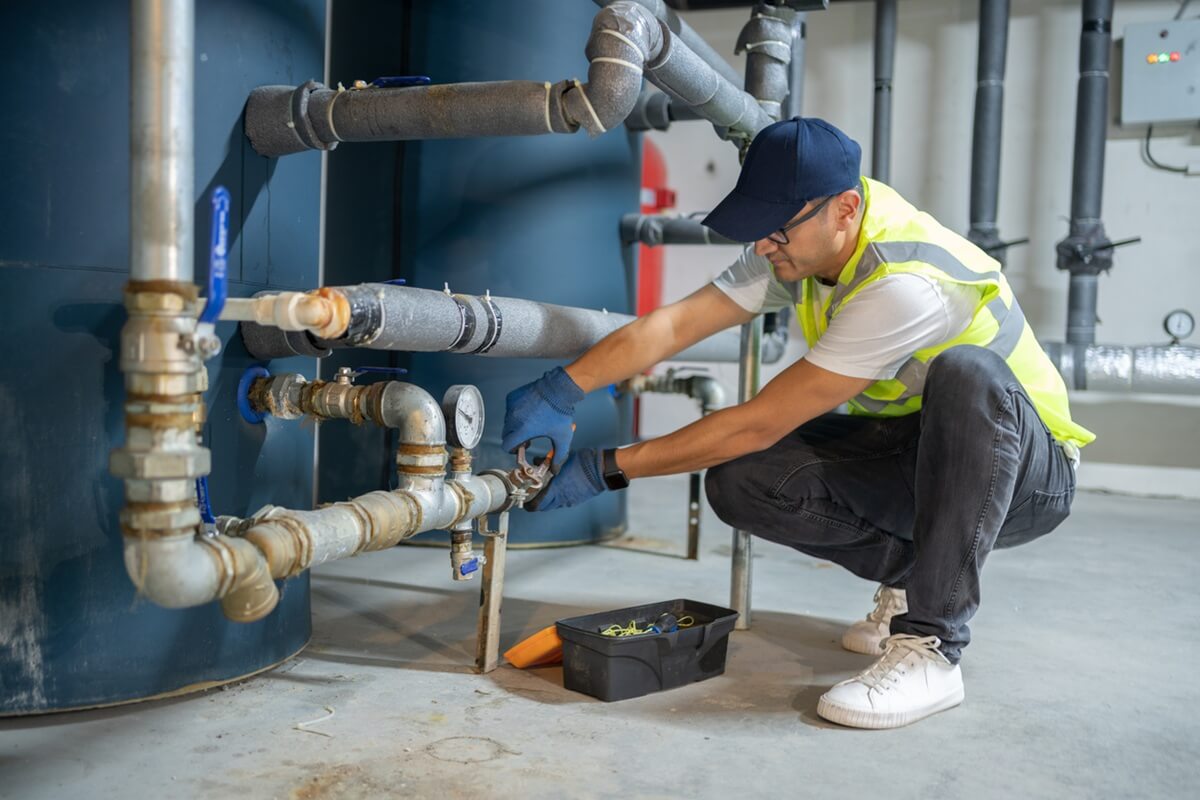
Ensuring the safety and purity of the public drinking water supply is a core regulatory priority across Ontario. While municipalities invest heavily in modern water treatment infrastructure, the integrity of the distribution grid depends heavily on individual commercial and industrial facilities. Without proper isolation containment systems, non-potable fluids, industrial chemicals, or stagnant water can migrate backward into the municipal main lines.
To mitigate public health risks, the Province of Ontario and local municipal governments enforce strict legal mandates regarding backflow prevention. Navigating commercial backflow preventer testing requirements in Ontario is a key compliance responsibility for commercial property managers, building owners, and industrial executives across the Greater Toronto Area (GTA). Understanding the governing legal frameworks, facility risk classifications, and municipal enforcement mechanisms is essential to maintaining property compliance and avoiding costly business interruptions.
What is Cross-Connection Control and Why Does Your Facility Require It?
At its core, cross-connection control is a regulatory and engineering system designed to prevent water supply contamination within public and private plumbing networks. A cross-connection is defined as any actual or potential physical connection between a potable water line and any pipe, vessel, equipment, or auxiliary source containing non-potable water, chemicals, or other substances.
Under normal operating conditions, municipal water mains maintain continuous positive pressure to deliver drinking water throughout a facility. However, sudden pressure shifts within the municipal distribution system or internal plumbing networks can cause the flow direction to reverse, creating a backflow event. This occurs through two distinct hydraulic conditions:
- Backsiphonage: A drop in supply pressure within the municipal main line creates a negative pressure or vacuum effect. This pulls non-potable liquids from commercial fixtures, process equipment, or storage tanks back into the public supply. Triggers include municipal water main breaks, nearby high-volume firefighting operations, or routine main flushing.
- Backpressure: Occurs when internal commercial systems—such as high-pressure steam boilers, HVAC chilled water loops, industrial wash systems, or chemical processing units—operate at a higher pressure than the incoming municipal supply, forcing process fluids upstream into the drinking water line.
To identify and regulate these hazards, municipal authorities require commercial properties to undergo a comprehensive cross-connection control survey. Conducted at mandatory intervals, this survey evaluates the entire property to identify potential hazard points, assess risk levels, and determine the exact types of backflow prevention assemblies required to protect the water grid.
The Legal Framework: Ontario Building Code and Municipal Bylaws (Toronto vs. Peel)
Commercial backflow compliance in Ontario is enforced through a layered regulatory system combining provincial statutory requirements with local municipal bylaws.
The Provincial Mandate: Ontario Building Code
At the provincial level, backflow prevention is governed primarily by Division B, Section 7.6.2 of the Ontario Building Code (OBC). The OBC mandates that every potable water system connecting to a potential source of contamination must be equipped with an appropriate backflow prevention device.
Furthermore, the OBC incorporates standards set by the Canadian Standards Association, specifically CSA B64.10 (Selection and Installation of Backflow Preventers) and CSA B64.11 (Maintenance and Field Testing of Backflow Preventers). These standards establish the baseline rules for device selection, installation parameters, and mandatory inspection frequencies across Ontario.
Municipal Enforcement: Toronto vs. Peel Region
While the OBC sets the technical construction parameters, ongoing operational compliance, annual certification enforcement, and property auditing are managed directly by local municipalities through specialized municipal water safety bylaws. Across the GTA, regulatory reporting mechanisms and compliance timelines vary significantly depending on the local jurisdiction.
City of Toronto (Municipal Code Chapter 857)
The City of Toronto enforces its program under Municipal Code Chapter 857 (Water and Surcharges – Water Services). Key compliance mandates for commercial properties include:
- Mandatory Five-Year Surveys: Commercial, industrial, and institutional property owners must submit a completed cross-connection control survey performed by a qualified professional every five years, or immediately following any significant alteration to internal plumbing systems.
- Annual Testing Mandates: Every backflow device installed for premise isolation or hazard containment must undergo annual testing.
- Authorized Testers: Test results are only accepted if completed by a tester who holds active registration with the City of Toronto Cross-Connection Control Office.
- Strict Submission Timelines: Test reports must be officially uploaded to the City’s online registry within a specified window following the inspection date.
Region of Peel (Bylaw 42-2021)
Serving the municipalities of Mississauga, Brampton, and Caledon, Peel Region manages cross-connection compliance through its Water Pipe By-law 42-2021:
- Qualified Contractors List: Property owners in Peel must select service providers from the Region’s pre-approved “Qualified Contractors List.” Unregistered technicians cannot legally submit compliance reports to the Region.
- Property Containment Requirements: Peel Region focuses heavily on “Premise Isolation,” ensuring that the boundary between the private property and the municipal main is fully secured before internal distribution occurs.
- Annual Cycle Notifications: The Region issues automated annual compliance notices tied to the original registration date of the property’s device, requiring prompt online certification to avoid administrative penalties.
Other GTA jurisdictions—including York Region (Vaughan, Markham, Richmond Hill), Halton Region (Oakville, Burlington), and Durham Region—enforce similar dedicated bylaws tied directly to the CSA B64 standard framework.
Types of Backflow Assemblies Requiring Annual Certification
Municipal bylaws require different levels of backflow protection depending on the hazard rating of the commercial facility or specific equipment connection. Devices are broadly categorized into specific mechanical configurations, each carrying distinct regulatory implications and maintenance obligations.
Double Check Valve Assemblies (DCVA)
A Double Check Valve Assembly (DCVA) consists of two independently operating, spring-loaded check valves mounted in series within a single body, flanked by two tightly sealing isolation valves and equipped with diagnostic test cocks.
- Regulatory Hazard Level: Approved exclusively for Low to Moderate Hazard applications.
- System Capabilities: Capable of preventing backflow caused by both backsiphonage and backpressure, provided the substance involved is classified as non-toxic and poses no threat to human health (e.g., non-toxic pollutants or aesthetic contaminants).
- Common Commercial Uses: Multi-residential complexes, general retail plazas, commercial office buildings, standard dry-pipe fire sprinkler lines without chemical additives, and standard commercial service connections.
Reduced Pressure Principle Assemblies (RPZP)
A Reduced Pressure Principle Assembly (RPZP)—commonly referred to as a reduced pressure zone (RPZ) valve—is the highest level of mechanical backflow protection recognized under Ontario regulations.
An RPZ valve features two spring-loaded check valves separated by an automatically operating differential pressure relief valve located in an intermediate zone. If either check valve leaks or if pressure conditions destabilize, the relief valve automatically vents the fluid to the atmosphere, physically preventing contaminated water from moving back into the potable water supply.
- Regulatory Hazard Level: Mandatory for all High / Severe Hazard cross-connections where backflow could introduce toxic chemicals, industrial pollutants, biological agents, or heavy metals into the municipal water system.
- Strict Compliance Standards: Due to the severe nature of the hazards involved, RPZ valves are subject to strict installation rules, including mandatory atmospheric discharge clearance, flood protection considerations, and zero tolerance for missed compliance deadlines.
- Common Commercial Uses: Chemical manufacturing plants, commercial printing operations, medical and dental facilities, laboratories, commercial car washes, metal finishing operations, industrial boilers, chilled water HVAC systems, and wet fire suppression systems containing chemical additives or antifreeze.
Annual Compliance Requirements: Professional Qualification Standards
To maintain compliance with municipal regulations, property owners cannot simply perform internal maintenance checks. Ontario regulations dictate that annual assembly maintenance and mandatory certification testing must be conducted according to standardized legal protocols.
Certified Backflow Tester Qualifications
Under municipal bylaws across the GTA, a valid annual compliance report can only be issued by a certified backflow tester. To qualify, the individual must meet strict professional requirements:
- Trade Licensing: Must hold active credentials as a licensed plumber, Master Plumber, or certified fire protection technician in the Province of Ontario.
- Certification Accreditation: Must possess valid certification in Cross-Connection Control, typically issued through the Ontario Water Works Association (OWWA) or an equivalent accredited training institution, requiring recertification every five years.
- Municipal Registration: Must be actively registered and bonded with the specific municipality in which the work is being performed (e.g., registered on the City of Toronto or Region of Peel contractor portals).
The Official Certification Workflow
From a regulatory standpoint, the annual compliance process follows a strict chain of custody:
- Site Evaluation: The certified technician evaluates the assembly against CSA B64.10 installation standards, ensuring the unit is properly sized, accessible, and free of unauthorized modifications.
- Calibrated Diagnostic Testing: The technician utilizes specialized, annually calibrated differential pressure gauge equipment to verify that internal spring mechanisms, check valves, and relief valves operate within mandatory tolerances.
- Physical Tagging: Upon successfully meeting performance parameters, an official inspection tag is permanently affixed to the assembly, displaying the tester’s certification number, registration details, and the date of test completion.
- Municipal Submission: The completed certification documentation must be formally submitted to the relevant municipal backflow database prior to the annual deadline.
Consequences of Non-Compliance: Water Shutoffs and Corporate Penalties
Failing to adhere to municipal backflow regulations or missing annual submission deadlines exposes commercial property owners to significant legal, financial, and operational risks. Because cross-connections pose a direct hazard to public health, municipal authorities enforce compliance through stringent statutory measures.
1. Municipal Fines and Administrative Fees
Failure to submit annual compliance reports or complete mandatory cross-connection surveys within designated timeframes triggers immediate regulatory action:
- Notice of Violation: Initial non-compliance results in formal warning notices accompanied by administrative processing charges.
- Bylaw Fines: Continued non-compliance can lead to prosecution under local municipal bylaws, with daily fines ranging from $500 to $10,000 per day for ongoing infractions.
- Provincial Offences Act: Severe violations or failure to comply with municipal orders can be prosecuted under the Safe Drinking Water Act, 2002, where corporate entities face potential court-imposed fines reaching up to $100,000 per day.
2. Mandatory Order to Discontinue Water Service
The most immediate operational threat facing a non-compliant commercial property is water service termination. Under local municipal water bylaws, municipal officers hold the statutory authority to issue an Order to Discontinue Water Service.
If a property owner fails to rectify a backflow violation within the mandated notice period, municipal water crews will physically disconnect or lock out the property’s main water line at the curb stop. For commercial operations, a sudden water shutoff results in immediate business disruption:
- Manufacturing lines, food preparation, and industrial processes must cease instantly.
- Commercial HVAC systems, cooling towers, and steam boilers must be taken offline, creating risks of secondary equipment damage.
- Commercial premises are forced to close under provincial health regulations due to a lack of running water and operational sanitary facilities.
3. Corporate Civil Liability and Insurance Exposure
In the event that an uncertified or failing backflow device causes an actual contamination event within the public municipal water main, the property owner faces legal liability. The cost of emergency system flushing, public health notifications, regulatory investigations, and third-party personal injury claims can be severe.
Furthermore, standard commercial property and general liability insurance policies frequently contain exclusion clauses regarding losses, damages, or liabilities arising from intentional non-compliance with statutory regulations, municipal codes, or building laws.
Regulatory Best Practices for GTA Business Owners
To manage regulatory compliance effectively and protect your enterprise from administrative penalties, commercial building owners should follow these operational practices:
- Maintain an Internal Compliance Registry: Track all installed backflow prevention assemblies across your facilities, including device types, serial numbers, locations, hazard classifications, and annual renewal dates.
- Schedule Testing Proactively: Initiate annual testing requests 30 to 60 days before municipal renewal deadlines to allow sufficient time for potential repairs, parts sourcing, or re-testing.
- Verify Contractor Credentials: Ensure your plumbing and backflow service providers maintain active registration with your specific local municipality’s backflow control office.
- Retain Audit Documentation: Store all completed cross-connection surveys, maintenance records, and passed test reports on-site for a minimum of seven years to satisfy potential municipal audits or property transactions.
Contact D. Jason Plumbing Today
By actively managing your backflow compliance framework, you fulfill your statutory obligations under Ontario law, protect public drinking water safety, and ensure uninterrupted operations for your commercial facilities.
Contact D. Jason Plumbing today to ensure you are taking the preventative measures needed to keep your property compliant with regional regulations.
Sources:
- https://www.ontario.ca/laws/statute/02s32?utm
- https://www.buildingcode.online/1052.html
- https://www.toronto.ca/legdocs/municode/1184_851.pdf