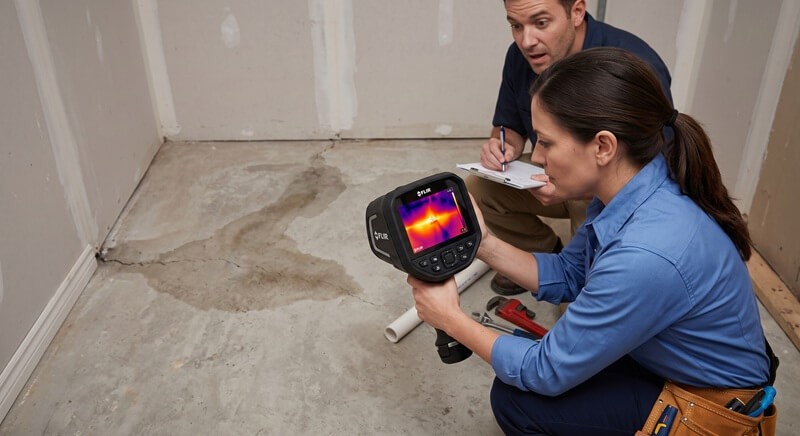
A silent disaster lurks beneath thousands of homes built on concrete foundations: the hidden slab leak. Unlike an overflowing toilet or a dripping kitchen faucet, a breach in a sub-slab water line occurs completely out of sight. Left unchecked, a minor rupture in your supply pipes can undermine your home’s foundation, cause expensive structural settlement, foster toxic mold growth, and waste tens of thousands of gallons of water.
When faced with mystery water spikes or damp spots on your ground floor, selecting the right diagnostic approach is the difference between a minor localized fix and a major, invasive renovation headache. This guide explores how electronic leak detection compares against traditional plumbing troubleshooting, showing how non-destructive diagnostics have changed how foundation slab leaks are found and resolved.
The Dilemma of the Invisible Water Leak: Hidden Under Concrete Slabs
Standard home construction often relies on concrete slab-on-grade foundations. During construction, plumbers run hot and cold domestic water supply lines through sand or gravel beds directly beneath the concrete pad before pouring thousands of pounds of liquid concrete over top. Over time, these buried copper, PEX, or galvanized iron pipes face severe environmental stresses, including:
- Soil Settlement & Shifting: Expanding clay soils or shifting earth cause ground movement, putting mechanical stress on copper fittings and joint elbows.
- Friction and Abrasion: As hot water flows through buried copper pipes, the metal naturally expands and contracts. If a pipe rests tightly against sharp aggregate or concrete rebar, constant friction wears down the pipe wall until a pinhole leak forms.
- Electrolysis & Chemistry: Chemical reactions between minerals in the surrounding soil and copper piping lead to galvanic corrosion, pitting the pipe from the outside in.
- Pressure Spikes: Sustained municipal water spikes force vulnerable pipe seams and corroded fittings to burst open under the slab.
Because the pipe is encased under several inches of solid reinforced concrete, water does not always travel straight up. Instead, escaping water follows the path of least resistance—migrating horizontally under the slab, saturating soil footings, or pooling beneath floor underlayment yards away from the actual leak source.
What Is Traditional Plumbing Troubleshooting? (The Destructive Search)
Before high-tech diagnostic tools were common, pinpointing a leak buried beneath concrete was largely a matter of educated guessing, trial and error, and brute force. Traditional plumbing methods rely heavily on physical visual evidence and destructive exploration.
When a plumber suspects a sub-slab leak using traditional methods, their process typically involves:
- Isolation & Static Pressure Checks: Performing basic water line pressure testing by shutting off fixture shut-off valves and checking if the home’s water meter continues to turn. While this confirms that a leak exists, it cannot tell you where it is located.
- Visual Hazard Mapping: Searching for warm floor spots, warped hardwood, or discolored carpet underlayment.
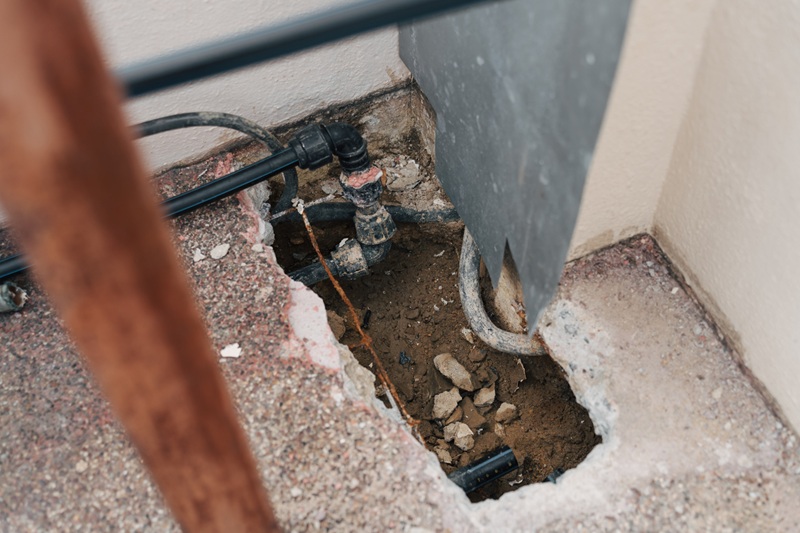
- Destructive Jackhammering: Once a general area is guessed, technicians break out heavy electric jackhammering equipment, chipping away sections of concrete slab, tearing through floor finishes, and throwing concrete dust throughout the living space to physically uncover the buried pipe.
The Downside of the Destructive Approach
Relying purely on traditional visual inspection and exploratory excavation has severe drawbacks:
- Inaccurate Site Selection: Water moves along channels beneath the foundation. A damp patch in your living room flooring could easily originate from a leaking elbow joint in your hallway 15 feet away. Jackhammering in the wrong spot creates unnecessary structural damage without exposing the breach.
- Collateral Damage: Breaking through living space flooring disrupts your household, risks severing embedded post-tension foundation cables, and creates major structural repair work.
- Massive Remediation Costs: Even if a plumber finds the leak on their second or third excavation hole, the home restoration bill for replacing flooring, subflooring, dust containment, and structural concrete often dwarf the actual plumbing repair fee.
How Electronic Leak Detection Works: The Non-Invasive Advantage
Modern plumbing technology has replaced invasive guesswork with high-precision electronic leak detection. By combining physics, sound analysis, and thermal dynamics, technicians locate hidden sub-slab water leaks within inches without disturbing a single floor tile or running a jackhammer until the exact position is verified.
The core benefit of modern non-invasive diagnostics is structural preservation. Rather than breaking down concrete to find the problem, technicians test the physical behaviour of escaping fluids and structural vibrations from above the floor surface.
Acoustic Sensor Diagnostics and Frequency Analysis
Water leaking under pressure through a tiny pipe crack creates distinct physical sounds. As pressurized water escapes into surrounding gravel or sand, it generates sonic vibrations that travel through the pipe material, soil bed, and concrete foundation slab.
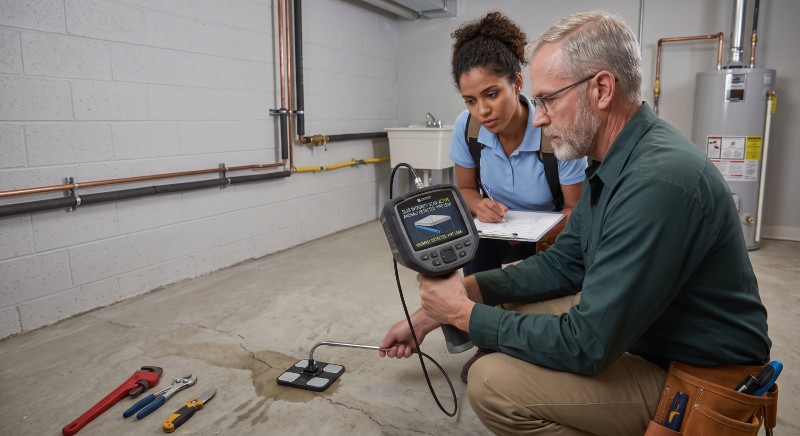
Using specialized acoustic listening devices, ground microphones, and surface contact sensors, technicians listen to sub-surface frequencies:
- Ground Microphones: Heavy, insulated microphones are placed directly on tile, hardwood, or bare concrete floors to filter out ambient room noise and amplify underground sound waves.
- Frequency Filtering: Pressurized leaks produce specific high-frequency hiss or low-frequency thumping noises based on pipe size, water pressure, and soil density. Advanced acoustic amplifiers isolate these exact frequencies, allowing the technician to follow sound volume increases across the floor grid.
- Correlation & Peak Detection: The spot where acoustic resonance and decibel readings reach their absolute peak indicates the exact location of the pipe breach underneath the slab.
Infrared Thermal Imaging and Tracer Gas Methods
When acoustic inspection alone is inconclusive—such as when leaks occur in low-pressure lines, deeply buried mains, or soft sandy soil that deadens sound—technicians rely on advanced thermal and gas-sensing technologies:
- Thermal Imaging Cameras: Hot water supply leaks rapidly heat up the surrounding concrete foundation. High-resolution thermal imaging cameras map infrared heat radiation through floor finishes. By scanning the room with a thermal lens, technicians can visually map buried hot water pipe runs across the house and identify bright infrared plumes where hot water is leaking beneath the slab.
- Tracer Gas Analysis: For extremely tiny pinhole leaks or cold water lines that do not emit distinct heat signatures, plumbers use tracer gas analysis. The plumbing circuit is isolated, drained of standing water, and pressurized with a non-toxic, non-flammable gas mixture (typically 5% hydrogen and 95% nitrogen). Because hydrogen gas molecules are small and lightweight, the gas escapes through the smallest pinhole crack in the pipe, rises through the concrete slab, and penetrates floor finishes. Technicians sweep an electronic hydrogen gas detector over the room; when the sensor detects rising tracer gas, it pinpoint-maps the leak location.
Cost-Benefit Analysis: Upfront Equipment Fees vs. Total Restoration Expenses
Property owners sometimes pause at the initial diagnostic fee charged by specialized leak detection companies. Modern acoustic, thermal, and tracer gas equipment requires substantial capital investment and certified technician training, making non-invasive testing appear more expensive upfront than basic exploratory plumbing.
However, comparing total project costs highlights the financial advantage of non-invasive technology:
- Upfront Costs vs. Financial Risk: Traditional exploratory plumbing starts with lower hourly rates but comes with a high risk of property damage due to multiple test holes cut into the slab and flooring. Electronic leak detection requires a moderate upfront diagnostic fee, but carries zero risk of initial property damage.
- Precision and Restoration Savings: Traditional troubleshooting relies on generalized guesses, often leading to extensive concrete patching and massive floor replacement costs. Non-invasive electronic methods pinpoint leaks within inches, requiring only a single, small access hole dug directly over the breach.
- Disruption and Overall Expenses: Destructive searching causes severe household disruption through jackhammer noise, dust, and multi-day repair projects. Electronic diagnostics provide a fast, quiet workflow that significantly lowers the total overall restoration bill.
Investing in non-destructive detection up front prevents thousands of dollars in secondary structural repairs, tile replacement, and flooring restoration down the road.
Signs Your Home Has an Underlying Foundation Slab Leak
Early identification is key to preventing major foundation damage. Homeowners should watch for these classic indicators of a hidden sub-slab water leak:
- Unexplained Spikes in Utility Bills: A sudden, unexpected jump in your monthly water bill without changes in household use is a prime sign of continuous water loss under your foundation.
- The Sound of Running Water: Hearing water rushing or hissing when all household faucets, showers, and water-using appliances are completely turned off.
- Warm Hot Spots Underfoot: Walking barefoot across your tile or laminate floor and discovering localized warm spots, which indicates a leaking underground hot water supply line.
- Damp or Warped Flooring: Carpet padding that feels damp, hardwood flooring that is cupping or buckling, or discolored tile grout lines with no visible overhead plumbing issues.
- Cracks in Walls or Baseboards: As water saturates sub-slab soils, foundation settling can cause vertical cracks in interior drywall, cracking along baseboards, or stuck doors and windows.
- Unexplained Water Meter Movement: Performing a baseline water line pressure testing check by shutting off all interior fixtures and watching your water meter’s low-flow leak indicator wheel spin continuously.
Contact D.Jason Plumbing Today
If you suspect a hidden water breach beneath your concrete foundation, skip destructive guesswork. Utilizing advanced electronic leak detection ensures your slab leak repair project begins with accuracy, protecting your home’s structural integrity while saving time, stress, and restoration costs. Contact D.Jason Plumbing to discuss solutions for your home’s leak detection.