
If your home or condo in Etobicoke or Mississauga was built between 1995 and 2007, there’s a hidden risk you shouldn’t ignore: Kitec plumbing. Once marketed as a modern, cost-effective alternative to copper, this now-infamous piping system has become one of the most concerning issues in Greater Toronto Area real estate.
Often described by inspectors and contractors as a “ticking time bomb,” Kitec plumbing has been linked to sudden failures, insurance complications, and expensive mandatory replacements. For homeowners planning renovations, buying property, or upgrading systems, understanding Kitec is essential.
What is Kitec Plumbing?
Kitec plumbing is a composite piping system made of flexible plastic (PEX), an aluminum core, and brass fittings. It was widely used in residential construction across Canada between 1995 and 2007 due to its affordability and ease of installation.
Manufactured by IPEX, Kitec was marketed as a corrosion-resistant and innovative alternative to copper. Builders across the GTA adopted it quickly, particularly in large-scale suburban developments and condominium projects in areas like Mississauga and Etobicoke.
However, what initially seemed like a breakthrough product quickly revealed serious flaws.
Why Kitec Plumbing Became a Major Problem
The core issue with Kitec lies in its materials, especially the brass fittings. These fittings contain high levels of zinc, which react with oxygen and moisture over time in a process called dezincification. This weakens the fittings internally, often without visible warning.
At the same time, the pipes themselves are vulnerable to heat and pressure. Hot water systems can exceed the temperature limits Kitec was designed for, accelerating deterioration.
The result?
- Sudden pipe bursts
- Slow, hidden leaks behind walls
- Reduced water pressure from mineral buildup
- Severe flooding and water damage
Kitec was officially recalled in 2005 and discontinued by 2007 after widespread failures and complaints.
The IPEX Lawsuit and What It Means for Homeowners
The growing number of failures led to a major class-action case known as the IPEX lawsuit. Homeowners across Canada and the U.S. filed claims against the manufacturer, resulting in a settlement fund reportedly worth $125 million.
While this settlement acknowledged the defects, it didn’t eliminate the problem. Many homeowners either missed the claim deadline or received compensation that didn’t fully cover replacement costs. You can read more about the cost of replacing Kitec piping here.
Today, the presence of Kitec plumbing is still a red flag in real estate transactions, and a liability that falls squarely on current property owners.
How to Identify Kitec Pipes in Your Home
One of the most important steps for homeowners is to identify Kitec pipes before problems arise.
The most obvious signs include:
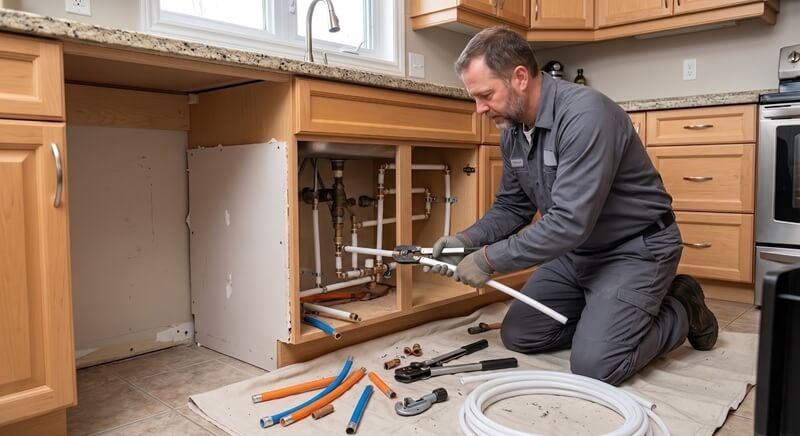
- Orange and blue plumbing pipes: Orange typically carries hot water, while blue carries cold
- Flexible plastic piping with an aluminum core
- Brass fittings stamped with labels such as “Kitec,” “KTC,” or “IPEX”
- Markings like “ASTM 1281” printed on the pipe
These pipes are often visible near hot water tanks, under sinks, or in unfinished basements.
It’s important not to confuse Kitec with modern PEX systems. While they may look similar, the performance and reliability are vastly different.
PEX vs Kitec: What’s the Difference?
At first glance, Kitec and PEX plumbing can appear nearly identical. Both use flexible plastic piping and were designed as alternatives to rigid copper systems.
However, the differences are critical:
- Material reliability: Modern PEX is engineered to withstand higher temperatures and pressure, while Kitec degrades under stress
- Fittings: PEX uses more durable fittings, whereas Kitec’s brass fittings are prone to corrosion
- Longevity: PEX systems are designed for long-term use; Kitec systems have a known history of premature failure
In short, while PEX is still widely used and trusted today, Kitec is considered defective and obsolete.
The Hidden Risk: Plumbing Insurance Denial
One of the most serious consequences of having Kitec plumbing is difficulty obtaining home insurance.
Many insurers in Ontario either:
- Deny coverage outright
- Require full replacement before issuing a policy
- Exclude water damage claims related to Kitec
This creates a major problem for homeowners and buyers alike. Even if your system hasn’t failed yet, the mere presence of Kitec can impact your ability to insure or sell your property.
Home inspectors and real estate professionals are now required to disclose Kitec when identified, further affecting property value and marketability.

Condo Pipe Replacement in Toronto: A Growing Trend
Kitec isn’t just a problem in detached homes, it’s widespread in GTA condominiums built during the same period.
In many Toronto condo buildings, entire plumbing systems are now being replaced proactively. These large-scale projects often involve:
- Opening walls and ceilings across multiple units
- Coordinating building-wide shutdowns
- Significant disruption for residents
Condo boards are increasingly mandating replacement programs to avoid catastrophic failures and insurance complications.
For individual unit owners, this means special assessments or renovation requirements may be unavoidable.
Repiping Cost in Mississauga and the GTA
Replacing Kitec plumbing, often referred to as “repiping,” is the only permanent solution.
Costs vary depending on the size and type of property, but general estimates in Mississauga and surrounding areas include:
- Condos: $5,000 to $15,000+
- Townhomes: $8,000 to $20,000+
- Detached homes: $15,000 to $30,000+
Factors that influence pricing include:
- Accessibility of pipes (finished vs unfinished spaces)
- Number of bathrooms and fixtures
- Wall and ceiling restoration after replacement
While the cost may seem high, delaying replacement can lead to significantly more expensive water damage repairs.
Why Kitec Is Called a “Ticking Time Bomb”
Unlike many home issues that show gradual warning signs, Kitec plumbing often fails without notice.
A system can appear perfectly functional for years, until a sudden rupture causes flooding within minutes. This unpredictability is what makes it so dangerous.
With an estimated hundreds of thousands of homes affected across North America, the issue is far from rare.
For homeowners in the GTA, especially in neighbourhoods developed during the late 1990s and early 2000s, the risk is particularly high.
What Should Homeowners Do Next?
If you suspect or confirm the presence of Kitec plumbing, taking action early is critical.
Start with a professional plumbing inspection to verify the system and assess its condition. From there, plan for full replacement rather than temporary fixes. Experts widely agree that partial repairs do not eliminate the underlying risk.
If you’re buying a home or condo, ensure Kitec is identified during inspection and factor replacement costs into your negotiation.
Contact D. Jason Plumbing Today
Kitec plumbing is one of the most significant hidden risks in GTA real estate. What was once marketed as a cost-saving innovation has become a costly liability for thousands of homeowners in Etobicoke, Mississauga, and beyond.
From identifying orange and blue plumbing pipes to understanding the implications of the IPEX lawsuit, insurance challenges, and repiping costs, awareness is your best defence. Contact D. Jason Plumbing to discuss keeping your home plumbing safe.
Sources:
https://www.canadianhomeinspection.com/home-reference-library/plumbing/kitec-plumbing