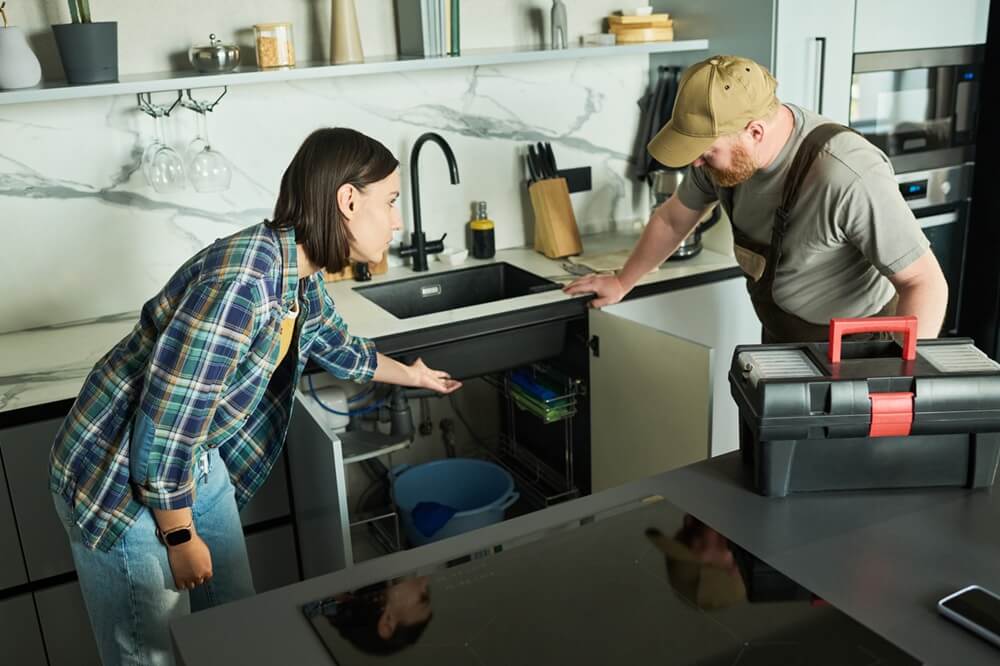
Walking into your home only to be met with the unmistakable, pungent odour of raw sewage is more than just an unpleasant surprise; it is a plumbing emergency that demands immediate attention. At D. Jason Plumbing, we know that plumbing odours diagnosis can be stressful for homeowners. You might be wondering if the fix is as simple as running a faucet or as complex as excavating a main line.
This guide will walk you through the most common culprits of a sewer gas smell in house, how to identify them, and when it’s time to call in the professionals.
Is Sewer Gas Dangerous? (Health & Safety First)
Before we dive into the mechanics of your pipes, we must address the “elephant in the room”: safety. Sewer gas isn’t just a nuisance; it is a complex mixture of toxic and non-toxic gases, including hydrogen sulfide, ammonia, and methane.
- Toxicity: High concentrations of hydrogen sulfide are toxic to the human body and can cause headaches, dizziness, or nausea.
- Flammability: Methane is highly combustible. While it usually takes a significant buildup to create an explosion risk, it is a factor that should never be ignored.
- Asphyxiation: In extreme cases, sewer gas can displace oxygen in confined spaces.
Culprit 1: The Dried-Out P-Trap (The #1 Cause)
The most frequent reason for a sudden sewage stench is also the simplest to fix. Every drain in your home, sinks, showers, and floor drains, is equipped with a “P-trap.” This U-shaped pipe is designed to hold a small amount of water at all times. This water acts as a physical seal, blocking sewer gases from rising up through the pipes and into your living space.
If a guest bathroom or a basement floor drain goes unused for weeks or months, the water in that trap evaporates. This results in a dry p-trap, leaving the “door” wide open for odours to enter your home.
The Easy Fix: Just Add Water
If you suspect a floor drain dried out in your mechanical room or a spare tub is the source, the solution is easy:
- Run the tap or pour a gallon of water down the drain.
- Wait about 15–20 minutes for the air to clear.
- Pro Tip: If it’s a drain you rarely use, pour a teaspoon of mineral oil down after the water. The oil sits on top of the water and slows down the evaporation process.
Culprit 2: The Broken Toilet Wax Ring
If the smell seems localized to a specific bathroom and persists even after you’ve used the fixtures, the issue might be under your feet. Your toilet is sealed to the closet flange (the drain pipe) by a wax ring. This ring creates an airtight and watertight seal.
Over time, if a toilet becomes loose and “rocks” back and forth, the wax ring can compress or crack. A wax ring toilet leak doesn’t always result in a puddle of water on the floor; sometimes, it only allows gas to escape. If you notice a “wobble” when you sit down or see dark staining in the grout around the base of the toilet, the wax seal has likely failed.
Culprit 3: Clogged Vent Stacks (The “Gurgle” Sound)
Your plumbing system needs to breathe. Every home has a vent stack—a pipe that leads from your sewer system up through the roof. This stack allows sewer gases to escape into the atmosphere and provides atmospheric pressure so that water flows smoothly down your drains.
If a bird builds a nest in the stack, or if ice and debris clog it, the gas is forced back down and out of your interior drains. A key sign of a cracked vent stack or a clog is a “gurgling” sound coming from your sinks when you flush the toilet. This happens because the system is desperately trying to pull air from wherever it can get it.
Culprit 4: Cracked Sewer Lines (The Serious Issue)
The most significant cause of a sewer gas smell in the house is a structural failure in the waste lines themselves. This could be a crack in a cast-iron stack behind a wall or a break in the main lateral line under your yard or basement slab.
These cracks are often caused by:
- Tree root intrusion.
- Shifting soil or foundation settling.
- Corrosion in older galvanized or cast-iron pipes.
If the smell is strongest in the basement or outside near your foundation, or if you notice unexplained lush, green patches in your lawn, you may be dealing with a broken underground line.
Call D. Jason Plumbing Today
Sometimes, the source of the smell is a “ghost.” You can’t see a leak, the traps are full, and the toilets are tight, yet the smell remains. This is when it’s time to call in the experts at D. Jason Plumbing.
Locating hidden sewer gas leaks can be incredibly complex. Our licensed plumbers have the training and professional diagnostic tools required to trace the problem back to its source—whether it’s a hairline crack in a hidden pipe or a failing vent behind a wall. We take the guesswork out of the equation, finding the exact issue so we don’t have to tear into your home blindly to make the right repair.
Contact us today to ensure the smells you are experiencing in your home are resolved safely. We offer plumbing services to clients across Etobicoke, Mississauga, Toronto, and Brampton.